While I normally focus on technical topics on this blog, I want to take a step back today and talk about the human problem I was trying to solve when I built Domestic Abuse Services Mapped.
I worked for 5 years on the National Domestic Abuse Helpline supporting survivors of domestic abuse and all forms of violence against women and girls. A major part of this was signposting callers to local services that could provide ongoing tailored support. One issue I came across consistently was that survivors didn’t know there was a local service and they didn’t know how to contact them.
At the same time as a software developer I had worked on a number of mapping and geographic data visualization projects. It seemed logical to me to combine my technical skills with my experience and knowledge of the VAWG sector to make something that could help people.
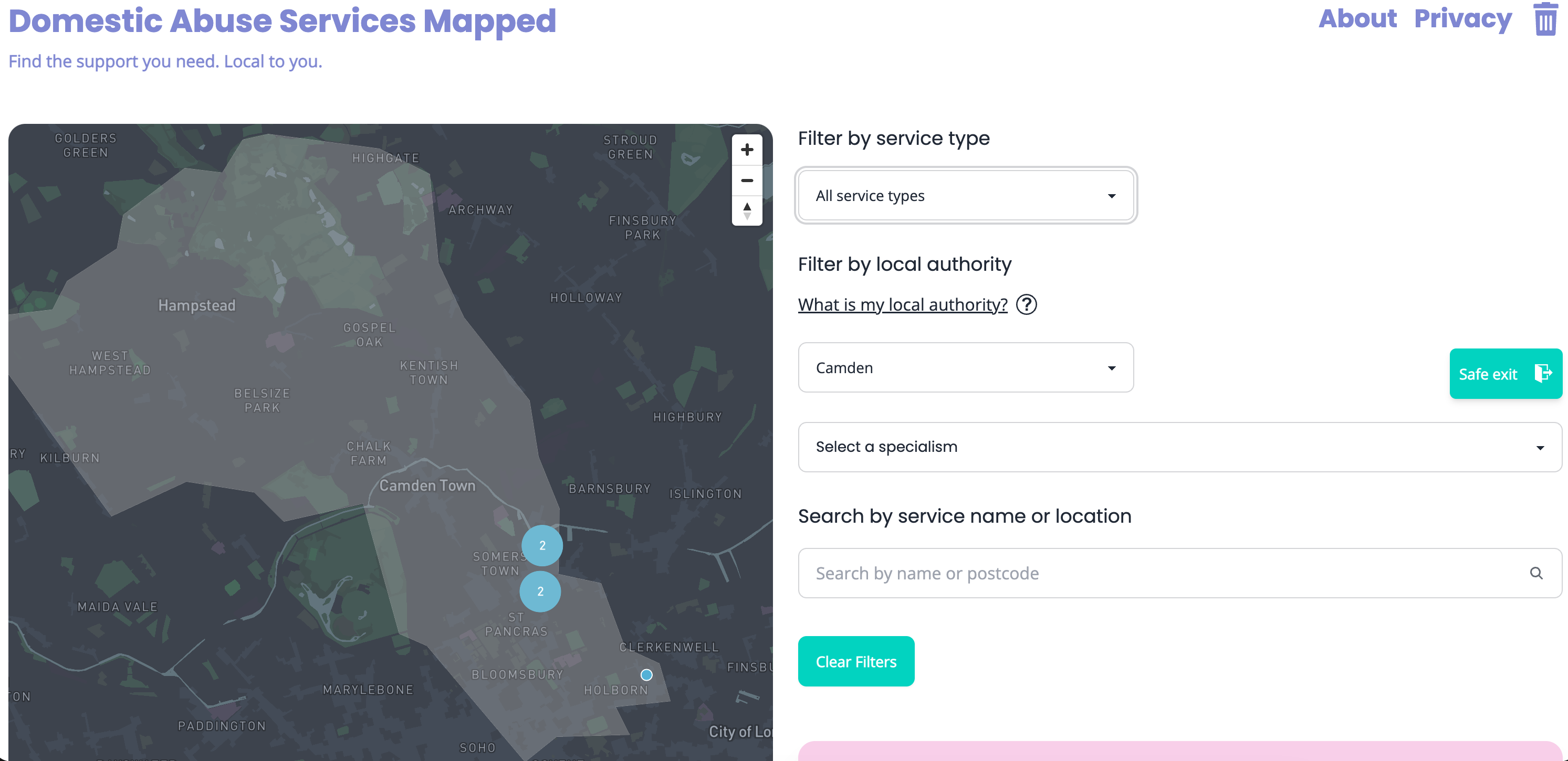
My first task in developing the site was to gather the data on each local authority’s domestic abuse support service across the UK. I don’t rely on AI or web scraping to collect this information as I feel a responsibility to users to ensure it is correct. I do my best to keep the listings up to date but if you notice an omission of inaccuracy you can submit to the site here.
In contrast to static text listings this platform maps local support visually. Survivors can enter their location using whatever feels easiest—a postcode, town name, or local council—and instantly get a list of nearby services sorted by distance. They can also pan and zoom across the map, making it easy to discover additional sources of support.
I’d like to focus now on getting more of other types of services onto the site such as sources of free legal advice, immigration advice and emergency housing options. Above all I’d like to respond to the needs of survivors with technical solutions to the best of my ability.
If you need help or support you can find your local domestic abuse service here. You can also contact the National Domestic Abuse Helpline at https://www.nationaldahelpline.org.uk/